
Trudging. Two steps forward, halt. Rain comes. Fix the rake. Rain comes, work on the fence. Too much rain today. Best stay home.
Sun’s out. If only a breeze’d kick in, we could rake after lunch. Let’s drive out, check the hay. See the damp grass underneath? Smell it? By lunch, that should dry up enough ta rake. Get the tractor ready. Hook up the rake. Check the bolts. Grease the zerks. Check ‘em twice. Add the oil. Meet me out at the field. Damn! I forgot ta put gas in. You know where we’re goin’? I’ll meet ya there.
Baler’s broke down. Need to go to town quick get a new bolt. Rain’s comin’ tonight. Suppose we won’t bale ‘til the next day. Best fix fence while it’s wet. If only it’d dry up for a week! Other years we’d be begging for some rain ‘bout now.
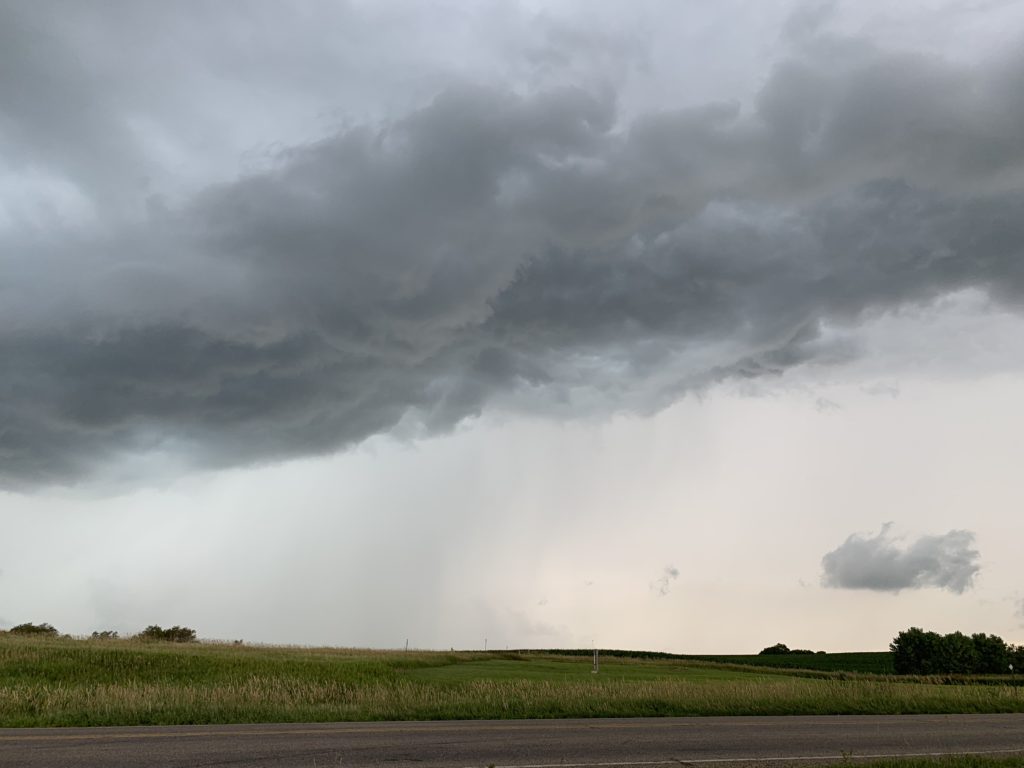
Rain, rain go away, the hay will never cure this way.
Farming is not a smooth process. Rarely does everything come together as you’d expect. And when you have help like Jessie and me, it’s bound to go even slower and include several mistakes.
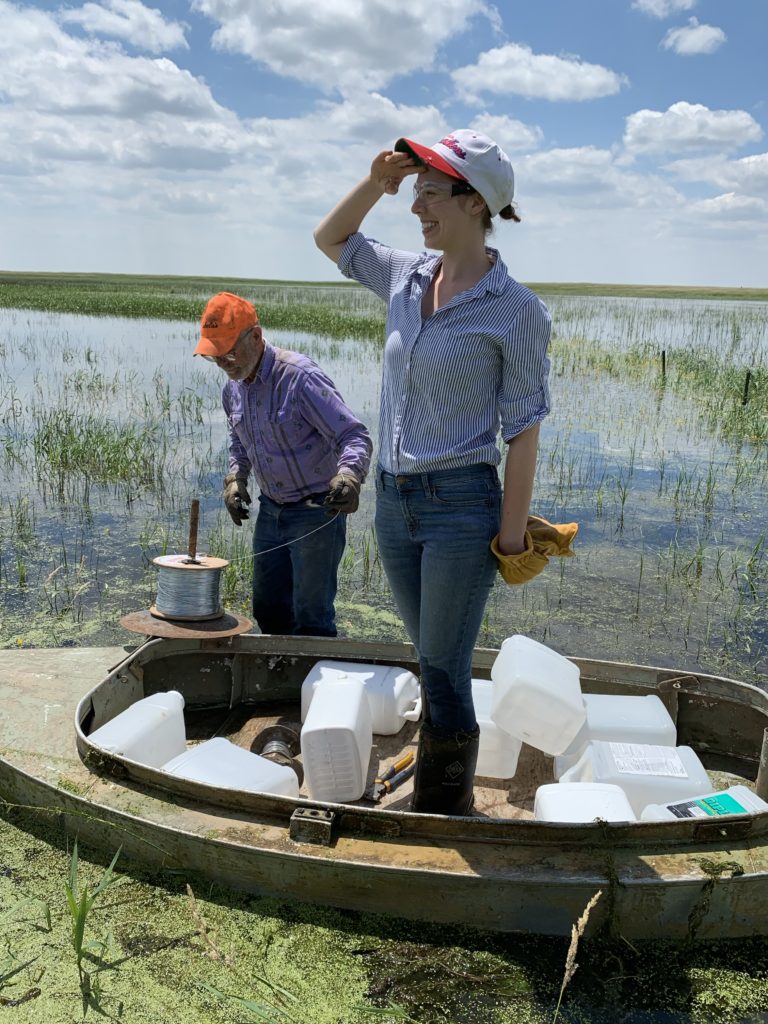
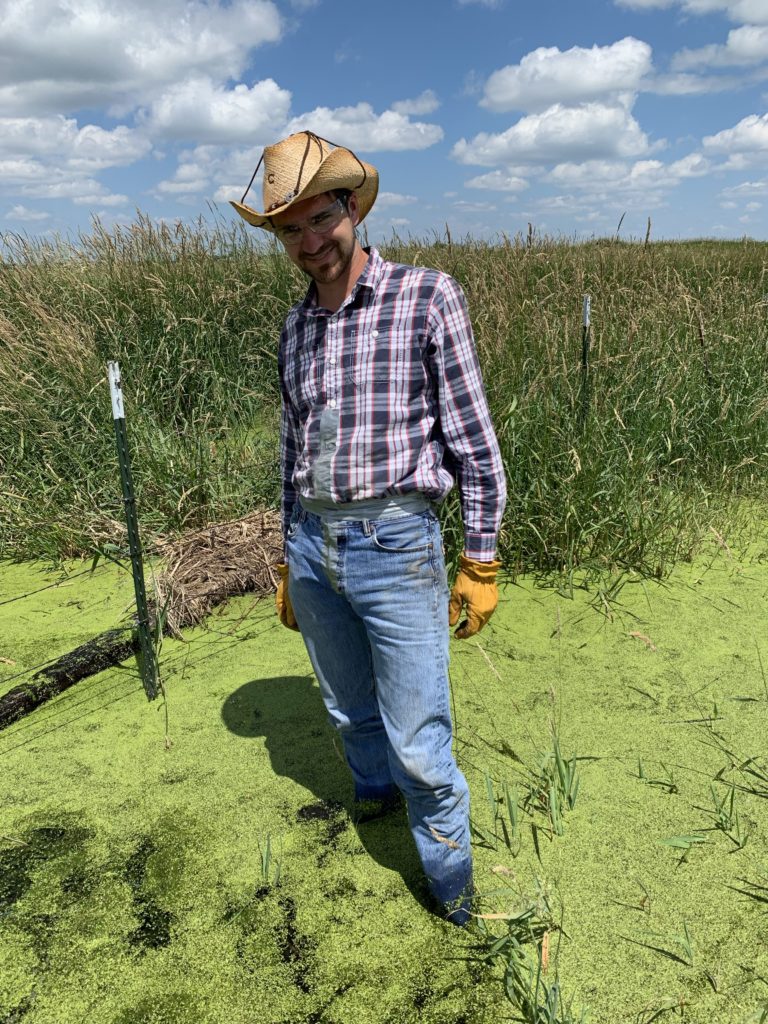
But, that’s beside the point…
The process of turning grass and alfalfa into hay bales is long and subject to weather and machines. Grass grows until it’s long enough. It gets cut with a sickle mower, flipped into windrows with a rake, turned into bales with a hay baler, and stacked into rows with a bale fork (two rows of 17). Only then is it ready to be hauled to wherever the cattle are or sold. If it’s too wet, it can catch on fire when it’s stacked. If it sits out too long, it will turn to manure and the new grass can obstruct the rake and the baler. If a lot of grass is left behind from the last cut, the sickle mower can get jammed in the next cut. The hay fields are spread out as well, some of them over three miles away. Traveling to the fields with a tractor can be a lengthy commute.
Then there’s machine maintenance and set up. Every rotating thing on every machine has a zerk that needs to be greased regularly. Many bolts need to be retightened. Tractor oil needs to be refilled. There are several dozen teeth on the sickle mower and rake. The teeth break often and need replacing. Hopefully, at that point, everything is working, especially the A/C!

Sometimes a rainy day is an excuse to check over the machines. More often than not, rain is an inconvenience.
And that’s how all these steps feel- an inconvenience.
We exist in a convenience culture. Apps and products are all designed and marketed to make our lives easier, quicker, smoother. Transportation departments and city planners think about how to shorten commutes (usually). Cities are designed to keep everything in close proximity. I’m always scheming the quickest way to complete my checklist, trying to figure out which roads will have the least traffic, attempting to finish a task or assignment as fast as possible. New and improved? I’m in. My life has been characterized by the rush. A hiccup in the plan is an unwelcome intruder at a minimum; more like incredibly offensive. Then, we decided to work on a farm in South Dakota for a month.
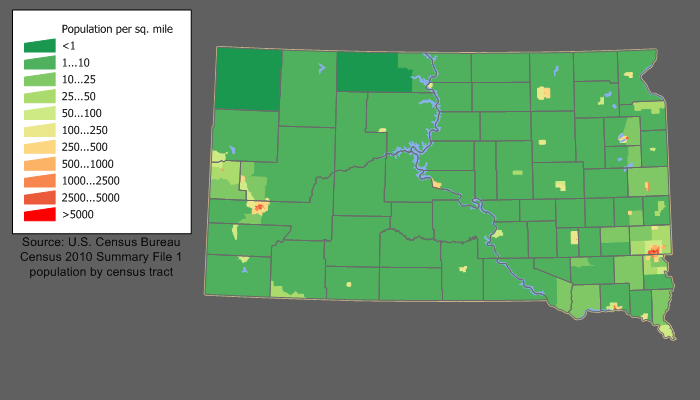
South Dakota is big, and the towns are far and few between, and small. Clark is big enough to have many standard amenities and public services, but many in South Dakota will make a two-plus hour drive for a dental appointment, a three-hour drive for a medical check-up and a forty-five-minute drive for groceries.
Then there’s the farming. The farm isn’t one giant piece of land. It’s many small parcels that are spread, often miles apart. The machines break down regularly, and the steps to maintain them are meticulous and regular. The weather is unpredictable, often deciding the work of the day despite plans made. The weeds are a menace, the animals don’t always cooperate, the gophers tear up the field, the fences break down, the electric wire loses its current, the deer and birds eat the crops, and sometimes you just plain make mistakes. In the end, the market decides how much all your hard work is worth, and buyers are always looking for a lower price. Dean calls his kind of farming high labor, low capital, and that it is.
There’s something beautiful in not only the submission to the inconvenience but the anticipation of it. Dean is always prepared for things to go wrong and doing all he can to make sure they go right. I think that’s a learned skill, not for the faint of heart. But then, maybe it’s a fallacy to believe that any of us could ever live a perfectly efficient life. Broken relationships, poor timing, health concerns, natural disasters, glitches, betrayals, plain old crappy days (or years), and more can “get in the way” of what we hope for.
I wrote everything before this just before we returned home from South Dakota. Now that it’s been two months, I can say that Jessie and I have been re-introduced to the struggle of a convenience and efficiency mindset. I have been looking for work, and Jessie has been learning to balance four part-time jobs as a personal contractor. We have to plan out every day. Jessie has four different sets of expectations to meet. And looking for work, I have often struggled with the feeling that I have six or more different sets of expectations to meet, as I feel the pressure to be financially stable and proactive and bold. If only things could snap together already. If only convenience was the way of the game. If only every step happened in the amount of time I expected it to.
But then, I’m reminded by John Swinton in a book called Becoming Friends of Time that “three miles an hour is the speed of love,” because Jesus walked almost the whole time he was on earth. Think about how many more people he could have encountered and influenced if he ran all the time or rode a donkey everywhere. Think about all the time he wasn’t influencing anyone because he was just praying. Get up and do something! But, His speed was the speed of love, and I think that means love is present with the circumstances at hand because love is present with the people at hand. Swinton writes, “If in God’s coming kingdom ‘slow is the new fast’ and if gentleness and vulnerability are the new modes of transformative power, we find ourselves in a quite different world that holds to a different perception of time.” I want to be involved in this pace of life – God’s time.
A Catholic canticle I have taken from Kathleen Norris during my time in South Dakota goes something like this:
All you winds, bless the Lord.
Fire and heat, bless the Lord;
Cold and chill, bless the Lord…

I love it and love to insert the circumstances of my life, both favorable and unfavorable as modes toward worship:
Another day and no job, bless the Lord.
Patience and forgiveness, bless the Lord.
Feeling insecure in this season, bless the Lord.
Thank you, Anna and Dean, for teaching us so many things, even those that we can take home with us.
New circumstances arose a week ago, but I needn’t share them now, because I still find myself in a similar relationship to time. So, I ask, what if we can become people who relate to time in a new way? I would love to learn alongside you. In fact, I would love to learn what you have learned.
How do you relate to time? How do you slow down? How do you deal with inconveniences, both large and small? What sustains you in those times?
Anna Kirkeby
October 29, 2019 | 9:58 pm
Beautiful correlations Jack. We lived your time with us. The wet weather has hampered harvest so we abide with crossed fingers and a prayer for favorable weather. The sky is big and blue and dry today so maybe tomorrow…….